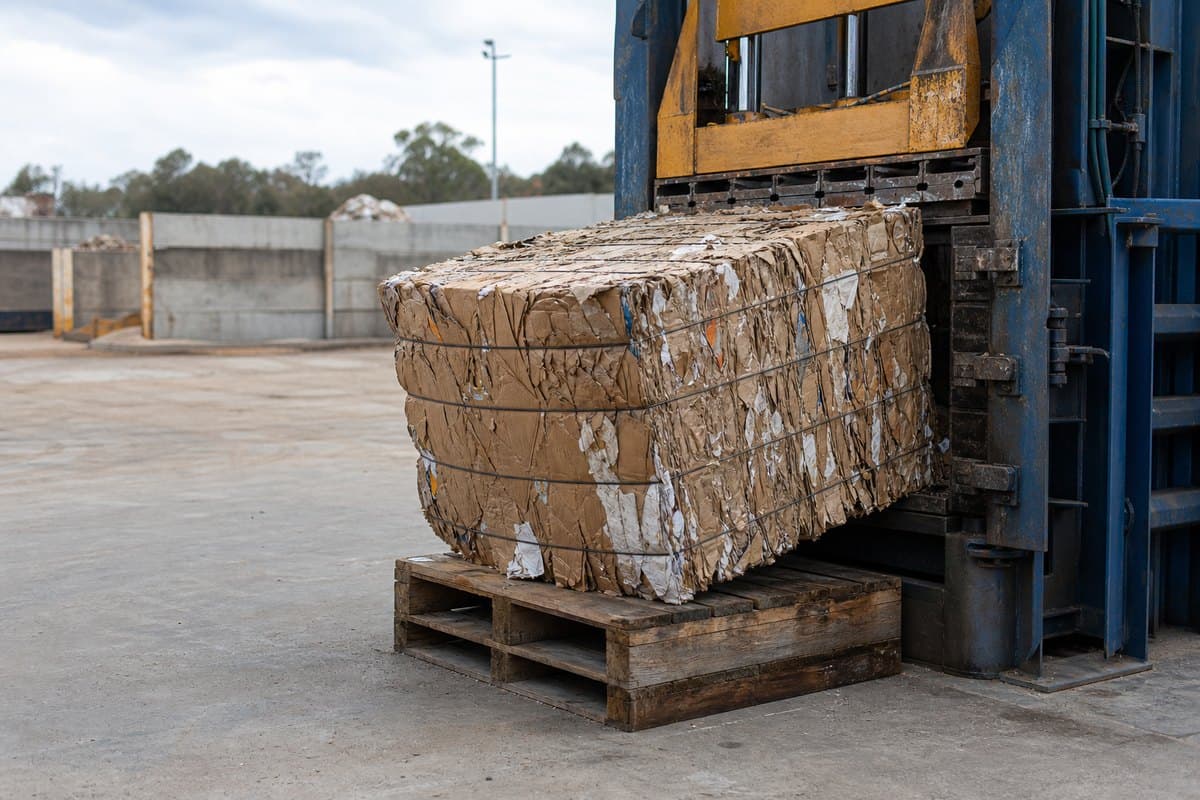
Cardboard and film are mostly air. A baler squeezes the air out, which does two useful things: it cuts how often a truck has to come, and it turns loose material into a graded commodity with a market value.
The rough test
If you're filling a three cubic metre cage more than twice a week, a vertical baler will almost certainly pay for itself on collection frequency alone. Below that, the numbers usually don't work and cages are the better answer.
The second test is space. A vertical baler needs a footprint of roughly two square metres plus clearance to open the door and room to move a finished bale out on a pallet jack. If your dock can't give up that space during a busy period, the baler becomes an obstacle instead of a saving.
Where people get it wrong
Buying too big is the most common mistake. An oversized horizontal baler on a site producing four tonnes a month is capital sitting idle, and it will still be sitting idle in year five.
The second is forgetting who operates it. A baler used by twelve casual staff across three shifts needs different training and guarding than one used by the same two dock hands every day.
You probably don't need to buy one
In most collection agreements the equipment is provided as part of the service rather than sold. That removes the capital question entirely and turns the decision into a much simpler one about whether the volume justifies the space.